
Concrete Basics
Concrete is one of the most versatile and widely used construction materials, but many people still confuse cement with concrete. This guide explains the basics of ready-mix concrete, including what it is made of, how it hardens, how weather affects placement, why curing matters, and what can be done to reduce cracking and improve performance.
Concrete vs. Cement: What’s the Difference?
Cement is only one ingredient in concrete. Ready-mix concrete is typically made from cement, sand, stone, and water. When these materials are combined in the right proportions, they form concrete.
Concrete can also be customized with admixtures to improve performance in different conditions. Depending on the project, a concrete mix can be adjusted to:
set faster in cold weather
set slower in hot weather
become more workable without reducing strength
improve surface durability
help reduce shrinkage-related cracking
Because of this flexibility, ready-mix concrete can be proportioned for a wide range of applications, including footings, basements, sidewalks, driveways, slabs, and roadways.
What Makes Concrete Harden?
When cement, sand, stone, and water are mixed together, a chemical reaction called hydration begins. During hydration, the cement particles react with water and start bonding together. As this process continues, the cement paste binds the sand and stone into a hardened mass.
The amount of water in the mix plays a major role in the final strength of the concrete. In general, too much water can reduce strength and durability, while the proper water-to-cement ratio helps create a stronger, more reliable finished product.
As hydration continues, the concrete gains strength over time. That is why proper placement, finishing, and curing are all important to long-term performance.
Mix Adjustments and Special Orders
Modern ready-mix concrete can be tailored to fit specific project conditions. Different admixtures and adjustments can help make concrete easier to place and better suited for weather, reinforcement, and jobsite needs.
Cold Weather Adjustments
In colder conditions, accelerators may be added to help concrete set faster and reduce the risk of freezing before it gains enough strength. If reinforcing steel or wire mesh is being used, non-calcium chloride options may be preferred.
Hot Weather Adjustments
In hot weather, retarders may be added to slow the set time and give finishers more working time before the concrete begins to harden.
Workability Adjustments
If a project requires a higher slump or more flowable concrete, a water reducer or plasticizer can improve workability without unnecessarily weakening the mix.
Fiber Reinforcement
Fiber mesh can be added to improve surface durability and help reduce issues such as plastic shrinkage cracking.
The right mix depends on the project, the weather, and how the concrete will be placed and finished.
Why Curing and Sealing Matter
Concrete does not stop changing once it is placed and finished. It still needs time and moisture to continue hydrating and developing strength, especially near the surface.
Proper curing helps:
improve strength development
protect surface durability
reduce rapid moisture loss
support better long-term performance
Concrete can be cured by applying curing compounds or by helping the surface retain moisture during the early stages after placement.
After the concrete has had time to cure, a penetrating sealer may help protect the surface from moisture intrusion and wear. When concrete is properly cured and protected, it is much more likely to perform well over the long term.
Plastic Shrinkage Cracking
What is plastic shrinkage cracking?
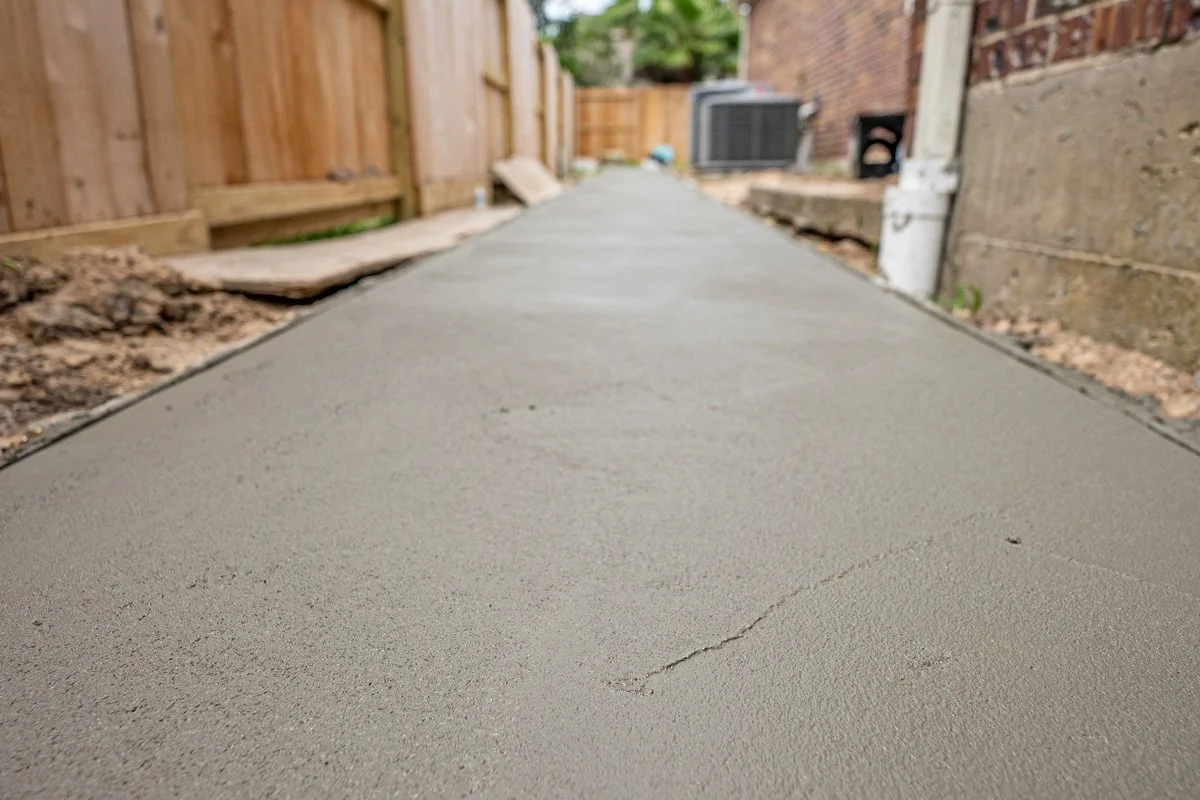
Plastic shrinkage cracking happens when the surface of fresh concrete dries out too quickly while the concrete is still in a plastic, non-hardened state. These cracks are usually shallow, often appear somewhat parallel to one another, and are commonly seen on slabs.
Although plastic shrinkage cracks can be unattractive, they do not usually have the same structural significance as deeper, more serious cracking.
What causes it?
Plastic shrinkage cracking occurs when moisture evaporates from the concrete surface faster than bleed water can rise to replace it. This is more likely when conditions include:
high temperatures
low humidity
wind
fast surface drying during finishing
How to help reduce plastic shrinkage cracking
Several jobsite practices can help reduce the risk, including:
using windbreaks or sunshades when needed
dampening the subgrade, formwork, and reinforcement before placement
using an evaporation retardant during finishing when conditions require it
starting curing as soon as practical
using synthetic fibers when appropriate
Good planning and weather awareness make a major difference.
Hot Weather Concrete
Hot weather can affect concrete placement and finishing in several ways. Higher temperatures can increase water demand, speed up slump loss, shorten set time, and raise the risk of plastic shrinkage cracking and other finishing problems.
Common hot weather issues
faster set times
quicker moisture loss from the surface
increased cracking risk
reduced workability
lower strength potential if the concrete is not properly cured
Helpful precautions in hot weather
To improve results in hot weather:
consider using a set retarder
avoid pouring during the hottest part of the day when possible
make sure enough labor and equipment are available
keep truck access and scheduling organized to avoid delays
start curing promptly
use windbreaks, sunshades, fibers, or evaporation retardants when conditions call for them
Hot weather does not mean concrete cannot be placed successfully. It just means planning matters more.
Cold Weather Concrete
Cold weather can slow strength gain and create serious problems if fresh concrete freezes before it develops enough strength. In general, cold weather placement becomes a concern when average daily temperatures stay below 40 degrees for several days.
If concrete freezes while still in a plastic state, its strength and durability can be severely reduced.
Why cold weather matters
slower set time
slower strength development
increased risk of freezing damage
need for additional protection after placement
Ways to protect concrete in cold weather
Cold weather precautions may include:
ordering concrete with heated materials when necessary
using an accelerator to speed up set time
using mixes with higher cement content when appropriate
placing concrete at a lower slump when suitable
insulating the finished concrete after placement
using insulated blankets or other protective coverings
The colder the conditions, the more important proper planning and protection become.
Need Help Choosing the Right Ready-Mix Concrete?
Whether you are planning a small residential pour or a larger commercial project, the right mix design, delivery plan, and weather preparation can make a major difference in the final result.
Explore our Ready-Mix Delivery services or request an estimate to discuss your project.